Holden Group
One Hub for Used Car Stock Across Every Sales Channel
List once, sell everywhere
Managing used car stock across nine different sales platforms was costing Holden Group valuable time and money. Each vehicle needed to be listed, updated and eventually removed from every channel individually, leaving sales teams with a growing amount of administration.
We developed a central vehicle management platform that brings the entire process together. From importing stock and building listings to publishing across multiple channels, much of the work now happens automatically, leaving Holden's sales teams to concentrate on selling cars.
- Saved annually in external platform costs
- £60k
- Reduction in sales administration time
- 90%
- Platforms managed through one central system
- 9
The Brief
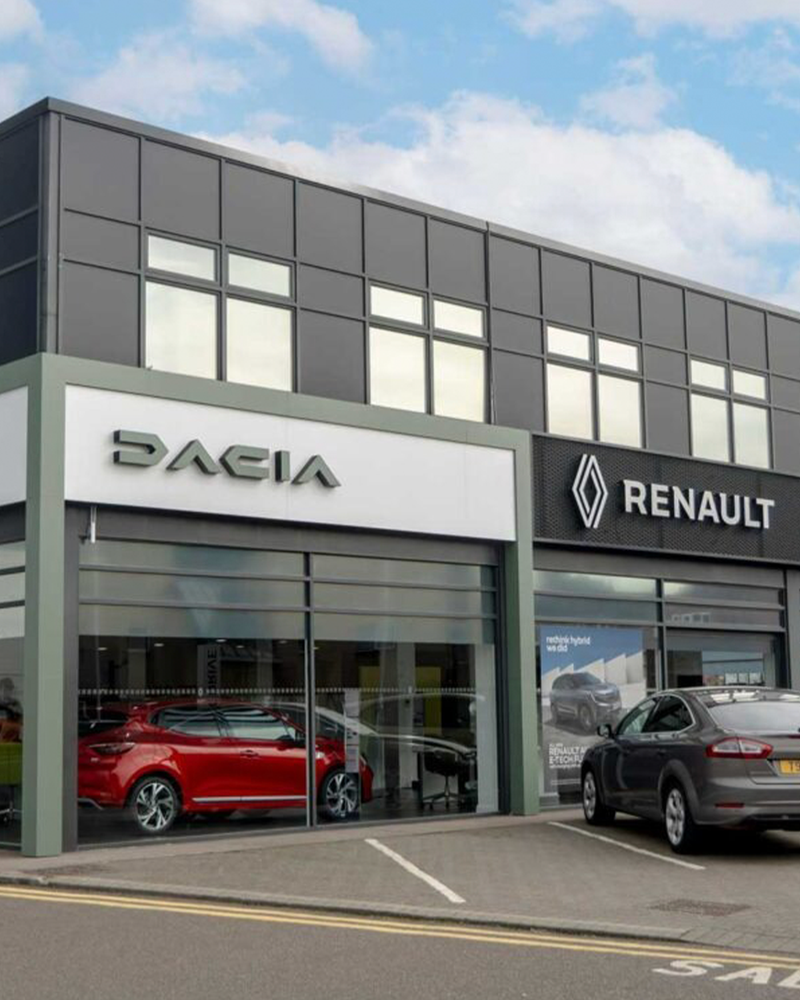
Holden Group represents some of the automotive industry's best-known manufacturers, including Volvo, Kia, Honda, Renault, Dacia and Polestar, across dealerships in Norfolk and Suffolk.
Used car sales are an important part of the business, but managing stock across multiple sales channels had become increasingly complicated.
Every vehicle needed to appear on AutoTrader, manufacturer platforms, finance providers, aggregator sites and Holden's own website. Each platform had different requirements, meaning sales teams were repeatedly entering the same information, updating prices and removing listings when vehicles sold.
As the business grew, so did the workload. It was an inefficient process that took salespeople away from customers and made it difficult to keep information consistent.
Holden needed a simpler way to manage its stock, without compromising the accuracy or quality of its listings.

The Strategy
Before developing the platform, we spent time understanding how vehicles move through the business, from arriving at a dealership to being sold.
This meant looking at every system involved, how information was shared between them and where manual processes could be replaced with automation.
The opportunity was considerable. Much of the repetitive work could be handled automatically, provided the different systems could communicate reliably.
But we also recognised the importance of keeping Holden's sales teams involved. Their knowledge of individual vehicles and the wider market remains valuable, so the platform needed to support their judgement rather than replace it.

The Execution
Bringing vehicle stock into one place
We developed a bespoke vehicle management platform that brings Holden's used car inventory together, regardless of where the information originates.
Vehicles are imported automatically from four different sources, including Holden's dealer management system, manufacturer APIs, XML feeds and CSV uploads. Each integration runs on its own schedule, with some checking for new stock every few minutes.
One of the challenges was making sure these different systems could work together without conflicting. We developed a process that tracks where each vehicle originates and determines which source is responsible for updating its information. This prevents one system from accidentally overwriting data managed by another.
The result is a central, reliable view of Holden's vehicle stock, without sales teams having to manually import or reconcile information between systems.
Building listings automatically
When a vehicle first enters the platform, it often contains little more than a registration number, price and mileage.
From there, the system automatically begins building a complete listing. Through integrations with AutoTrader and other services, it retrieves vehicle specifications, features, history, MOT information and valuations. Photography is also imported from Holden's imaging providers and matched to the correct vehicle.
We developed a background processing system to manage these different tasks, prioritising the information needed to get a vehicle ready for sale. More time-consuming processes, such as valuations and finance calculations, can continue running without holding up the rest of the listing.
This means a vehicle can appear in the management interface almost immediately, with additional information being added as it becomes available.
What previously required considerable manual input is now largely completed before a salesperson even opens the listing.
Giving sales teams control
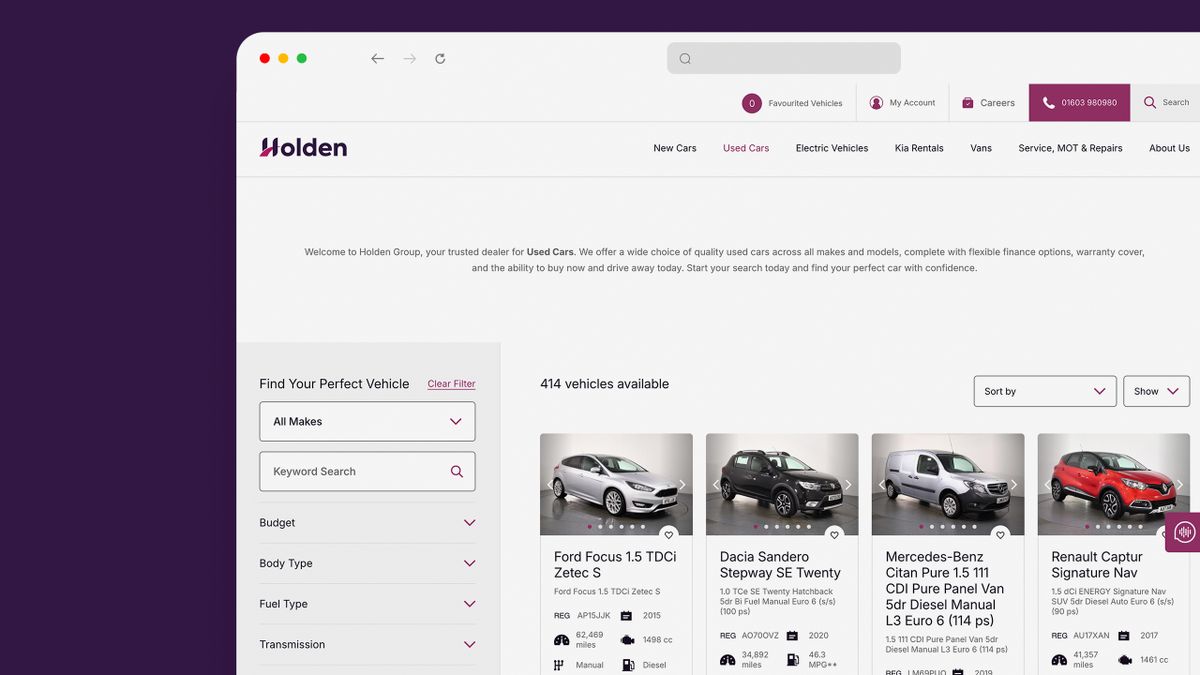
With vehicle information brought together, we designed a bespoke administration interface that makes managing stock straightforward for staff across Holden's dealerships.
Salespeople can search and filter vehicles by manufacturer, model, dealership, sale status and publication status. They can review automatically populated information, make adjustments and add any additional details needed before a vehicle goes on sale.
We also introduced different permission levels to reflect how Holden operates. Administrators have oversight of the entire group, dealership managers can manage and publish vehicles at their own locations, while salespeople can prepare and edit listings for approval.
Importantly, nothing is published automatically without human approval. Although the platform handles much of the preparation, Holden's teams retain the final say over the quality and accuracy of each listing.
Publishing across nine sales channels
Once a vehicle has been reviewed and approved, it can be published across Holden's sales channels from one central interface.
Behind this seemingly simple process is a series of integrations, each developed around the requirements of the receiving platform.
For services such as AutoTrader and Codeweavers, we built direct API integrations that allow vehicle information to be updated in real time. Manufacturer platforms receive automatically generated CSV or XML feeds twice daily, while other shopping and aggregator feeds update according to their individual schedules.
We also developed custom API endpoints for Holden's own website, allowing it to retrieve the latest stock information directly from the hub.
Rather than maintaining nine separate listings, Holden's sales teams now manage a single vehicle record, with the platform handling how and when that information reaches each channel.
Keeping stock accurate when vehicles sell
Publishing a car is only part of the process. Keeping stock accurate when a vehicle sells is just as important.
Previously, salespeople needed to remove sold vehicles from each platform individually, sometimes leaving cars advertised for several days after they were no longer available.
We developed an automated process that responds to changes in vehicle status, whether a car is sold through a dealership, Holden's website or a connected third-party platform.
Once a sale is recorded, the hub automatically initiates the removal of that vehicle from the relevant sales channels, following each platform's integration requirements.
We also accounted for vehicles under negotiation. Rather than treating these as permanently unavailable, the platform temporarily changes their status and can return them to sale if a negotiation doesn't progress.
This helps Holden avoid unnecessary missed sales opportunities while reducing enquiries about vehicles that have already sold.
Built to support the business as it grows
With so many integrations and automated processes running simultaneously, reliability was an important consideration throughout development.
We built the platform using Laravel, with a custom administration interface powered by Laravel Nova. Behind the scenes, more than thirty background jobs and around twenty scheduled operations manage everything from vehicle imports and data enrichment to publishing, stock updates and routine maintenance.
We also introduced detailed activity tracking, giving administrators visibility over how information moves through the system. If a vehicle fails to reach a particular sales channel, the team can identify where the process stopped and investigate the cause.
Failed operations can be retried, while individual integrations can be temporarily disabled without affecting the rest of the platform.
The result is a system that not only simplifies Holden's day-to-day operations, but gives the business greater control over its technology and the flexibility to introduce new dealerships, integrations and sales channels in the future.
The Results
The new platform has fundamentally changed how Holden manages its used car stock.
What was once a time-consuming process involving nine separate systems is now managed from a single place, with the majority of the administrative work happening automatically.
The financial benefits have been significant, with £60,000 saved annually in external platform costs and a 90% reduction in the time sales teams spend on administration.
Vehicle information is more consistent, sold stock is removed automatically, and salespeople have more time to spend with customers.
Just as importantly, Holden now has a platform built around the way its business operates, with the flexibility to accommodate new dealerships, sales channels and future requirements.
- Saved annually in external platform costs
- £60k
- Reduction in sales administration time
- 90%
- Platforms managed through one central system
- 9
Farrows developed a Used Car Hub for us, successfully handling complex integrations with partners such as AutoTrader and Codeweavers. The new approach has saved time, reduced our ongoing costs and removed expensive subscriptions and restrictive contracts. One of the biggest differences is the support. When we need help, they're always available on the phone and deal with things immediately, rather than forcing us into the black hole of a ticketing system and waiting for someone to respond. They took the time to understand our business and delivered a website that looks better, works better and costs us less to operate. I'd happily recommend them.